

ALTHEA GIBSON was the first female African American to win not one, but FIVE Grand Slam singles tournaments. An accomplishment in and of itself, it’s not her only claim to fame. She was also a pro on the LPGA tour and the nation’s first female state athletic commissioner.
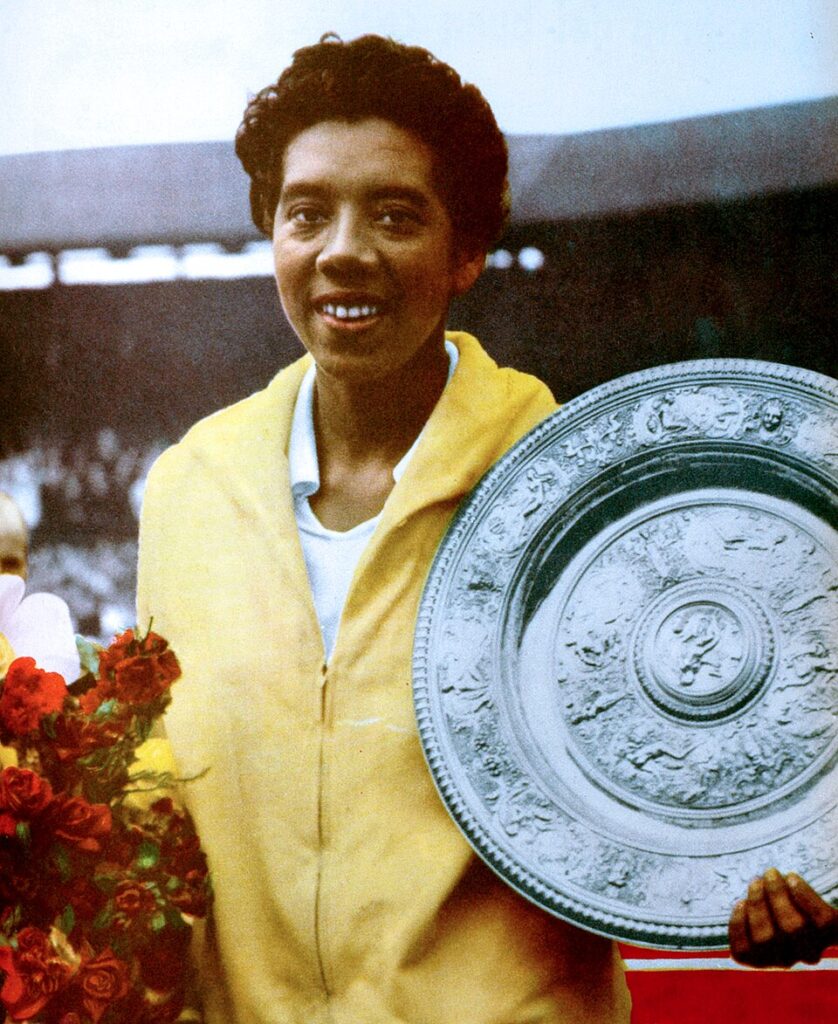
Born in Silver, S.C. and raised in Harlem, Althea Gibson demonstrated keen athletic ability as a child. By the age of 12, she’d won the New York City women’s paddle championship. Competing in the American Tennis Association (ATA—the oldest African American sports organization in the United States because…racism) she won the junior national championships at 17 and 18; and at the age of 18 she won the first of ten straight ATA national women’s titles. Her prowess brought her to the attention of Dr. Robert Johnson, a highly sought after tennis mentor. With his mentorship, and the backing of prominent supporters, Gibson’s 5’11” stature and aggressive style were poised to take on the establishment, which at this time was the domain of elite segregated country clubs.
Gibson made her debut at the U.S. Nationals, setting her up against a defending Wimbledon champion. While Gibson didn’t win that day, by 1951 she played Wimbledon as the first African American to compete at the event. Within five years, starting with winning the French Open, it was clear she was “a player to be reckoned with.”
Spanning fifteen years, Gibson’s amateur tennis career saw her win 58 titles as well as being a member of the elite Wightman Cup team that defeated England in 1957. Recognizing that becoming a professional tennis player yielded little money, Gibson turned pro golfer. In 1964, Gibson became the first African American to join the Ladies Professional Golf Association (LGPA).
Despite being called “unfeminine” because of her height and playing style, Gibson refused to change to fit other’s perceptions. While she was criticized for not participating in protests and marches for civil rights, she chose to fight the racial, gender, and class barriers placed on her by insisting on doing things her own way.
“I always wanted to be somebody. If I made it, it’s half because I was game enough to take a lot of punishment along the way and half because there were a lot of people who cared enough to help me.”
Thanks to Gibson we now have role models like the Williams’ sisters to lead the next generation of female athletes.
To learn more, visit:
- history.com: Althea Gibson
- International Tennis Hall of Fame: Althea Gibson
- National Museum of African American History & Culture: Leveling the Playing Field: Althea Gibson
Photo info: File:Althea Gibson – El Gráfico 2033.jpg, Public domain, via Wikimedia Commons