

SHIRLEY JACKSON’s short story “The Lottery” is a staple in American classrooms. Depicting a village where people have a lottery to determine who shall be stoned to death, the story has horrified students for generations. However, it is Jackson’s other works, such We Have Always Lived in the Castle and The Haunting of Hill House that depict her talent for creating nuanced psychological terror. Unfortunately, this is informed by her real life.
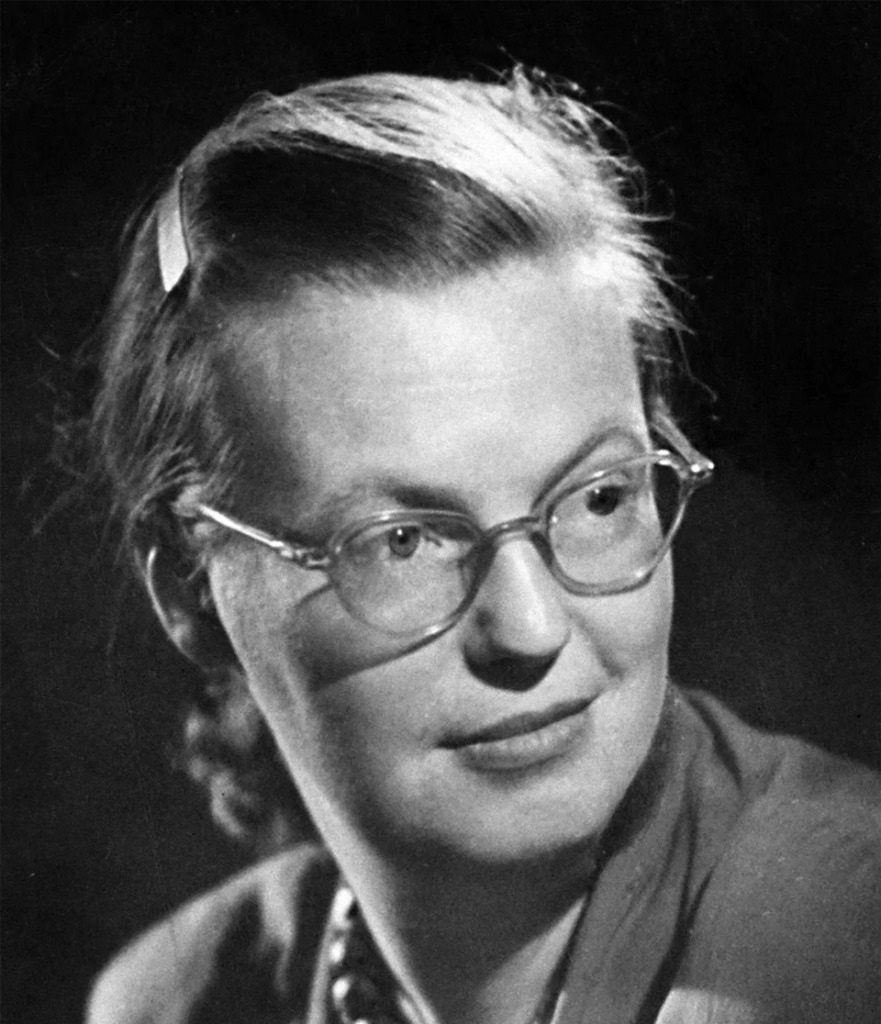
Born in San Francisco to an affluent family, Jackson endured years of abuse from her mother. Chastised for not being feminine enough, being overweight, and desiring to be a writer, Jackson suffered loneliness from an early age. Attending college at Syracuse University, she met and fell in love with a man who, at first, appeared to be her savior. He encouraged her writing and seemed to value her as she was. But alas, that wasn’t meant to be. He soon turned out to be just as abusive as her mother.
Jackson raised four children while writing full-time, becoming the family breadwinner. In addition to writing articles for Good Housekeeping and later, her novel Life Among the Savages, she wrote of her chaotic home life with wit and humor. She claimed to be an amateur witch, never proving that she was or wasn’t. Adding to her witchy vibe was her love of black (sometimes grey) cats. She owned at least six cats at a time. Her husband hated cats, so she assured him they would own no more than two at a time. However, as he was shortsighted and she only bought black (or grey) felines, he never knew how many cats they actually owned.
Despite her financial success, she began taking tranquilizers and abusing alcohol. Shirley Jackson died at 48 from cardiac arrest. Her stories are still as relevant today as when they were published. Her depictions of the psychological terrors of home life are still poignant.
To learn more, visit:
- Writing Rituals of Shirley Jackson (A Narrative of Their Own)
- Where to Start with Shirley Jackson (New York Public Library)
- How Shirley Jackson Exposed the Horror of Home Life (Books ‘n’ Cats)
Photo info: Eric Hartmann, Public domain, via Wikimedia Commons