

Welcome to 17th century Italy, where the Catholic Church reigns supreme and women are property. What’s a poor woman to do? Enter GIULIA TOFANA, the Reanaissance-era freedom fighter. If you were in a domestic, and your doctor couldn’t help and the Church wouldn’t help, she could remedy your problem.
When Giulia was only 13, her mother was executed for allegedly poisoning her father. Escaping to Rome, she soon befriended herbalists, laundresses, and, at least, one priest—all members of a highly successful underworld network focused on helping women escape abusive relationships. Guilia’s contribution? A deadly concoction known as Aqua Tofana, an odorless, tasteless substance that made poisoning easy-peasy.
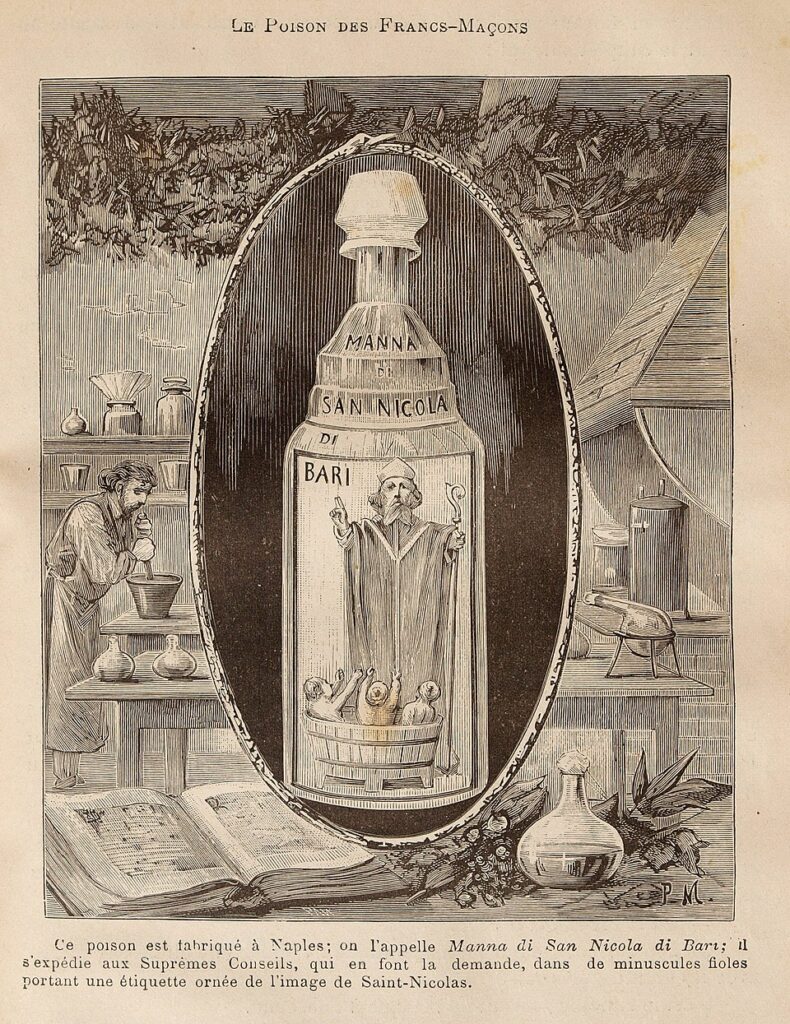
Guilia never solicited clients; instead, they came to her. Her elixir was distributed in a glass make-up bottle labeled, Manna of St. Nicholas of Bari. No one suspected a thing as it was a common item among women. Just a few drops into food, and the taster would become violently ill. But not so ill they couldn’t put their affairs in order. Once that was taken care of, a few more drops ensured an end to the whole sorted affair—the widow now free to live her life.
Guilia was highly successful, until her luck ran out after 20 years.
A woman, who’d poisoned her husband’s soup, had second thoughts. When she hesitated, he got suspicious, then beat her until she confessed. When Guilia was arrested, she confessed to poisoning over 600 people. No surprise, she was executed.
Given her confession to such an extraordinary number of deaths, Guilia Tofana is considered one of the most prolific assassins in history. Unlike other assassins who profit from their services, she never charged anyone. She did it to save women who otherwise would have been murdered at the hands of their husbands.
To learn more, visit:
- Historia Mag: Giulia Tofana: poisoner, murderer, saviour?
- Dr. Micki Pistorious: A Renegade Gang of Roman Renaissance Female Serial Killers?
- All That’s Interesting: Meet Giulia Tofana, The 17th-Century Professional Poisoner Said To Have Killed 600 Men
Photo info: 19th century engraving showing Poison “Manna di San Nicola” (Aqua Tofana), by Pierre Méjanel. Credit: Gravure dessinée par Pierre Méjanel et gravée par François Pannemaker., Public domain, via Wikimedia Commons