

MADAME TUSSAUD. Most travelers are familiar with her name because of the wax “museums” that populate touristy hotspots the world over. But did you know she has a link to an actual historical event? Something quite revolutionary….
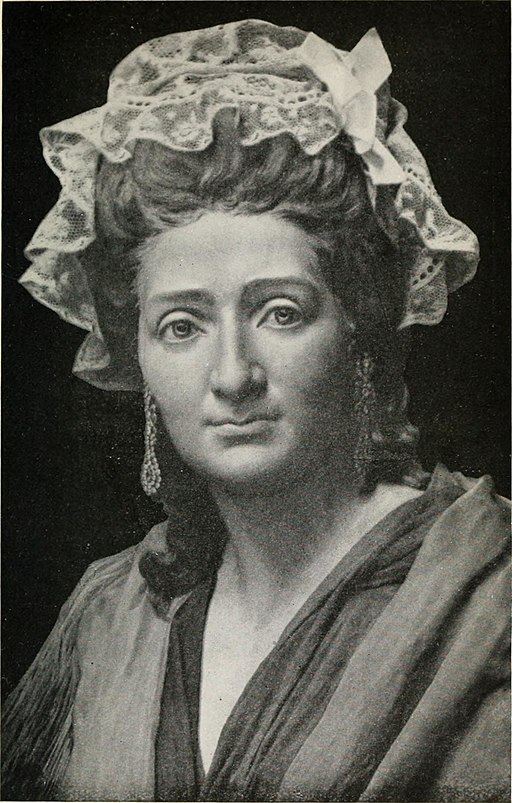
Originally from Strasbourg, France, ANNA MARIA “MARIE” GROSHOLTZ was born on December 1, 1761. Her father was killed in the Seven Years’ War two months before she was born, resulting in a troubling and impoverished childhood. When she was six, Marie and her mother moved to Bern, Switzerland, where she became a house servant. Her employer, that she referred to as “Uncle” Dr. Phillipe Curtis, taught her to sculpt wax. When he moved to Paris, she and her mother moved with him. It was here that her sculptures brought her to the attention of the royal court. She created her first wax figure in 1777 of Voltaire, and became a tutor to Elisabeth, King Louis XVI’s sister. It was through this connection she entered life at Versailles. For the next nine years, she resided at court…until revolutionaries stormed the barricades and she was branded a royal sympathizer.
During the Reign of Terror, she was sentenced to die by guillotine. Her head shaved, she was marched out to be executed… only to be saved at the last minute by her connections to her “uncle”. Instead of being executed, she was spared her life in exchange for “memorializing” those associated with the court. She was to make death masks and whole-body casts of the revolution’s most famous victims. People such as King Louis XVI, Marie Antoinette, and Robespierre are just a few of the infamous persons preserved in death by her.
In 1795, Marie married François Tussaud. They had three children but only two survived. In 1802, she traveled to London to present a collection of her portraits. She managed to secure an exhibition at the Lyceum Theatre, but it ended in financial disaster, and she moved on to Edinburgh. Even though things were not going well in the U.K., she was never able to return to France or her husband because of the Napoleonic Wars. With no permanent home, she created a traveling show that included not only her own work, but that of her “uncle” Curtis, who’d left her his entire collection upon his death. This collection later became the basis of her Chamber of Terrors, a popular tourist attraction in London.
In 1835, 33 years after arriving in England, Marie established her first permanent exhibit on Baker Street. With a place to display her wax sculptures, she busied herself with writing her memoirs and making a self-portrait that is still on display at the entrance to her London Museum. In fact, some of her original work still exists! Madame Tussaud died in her sleep at 88 on April 16, 1850.
For a name now associated with tacky tourist attractions, Madame Tussaud’s life was one of survival. She parlayed her artistic skills into her salvation and lived (literally) by her artistry. Viva la artiste!
To learn more: